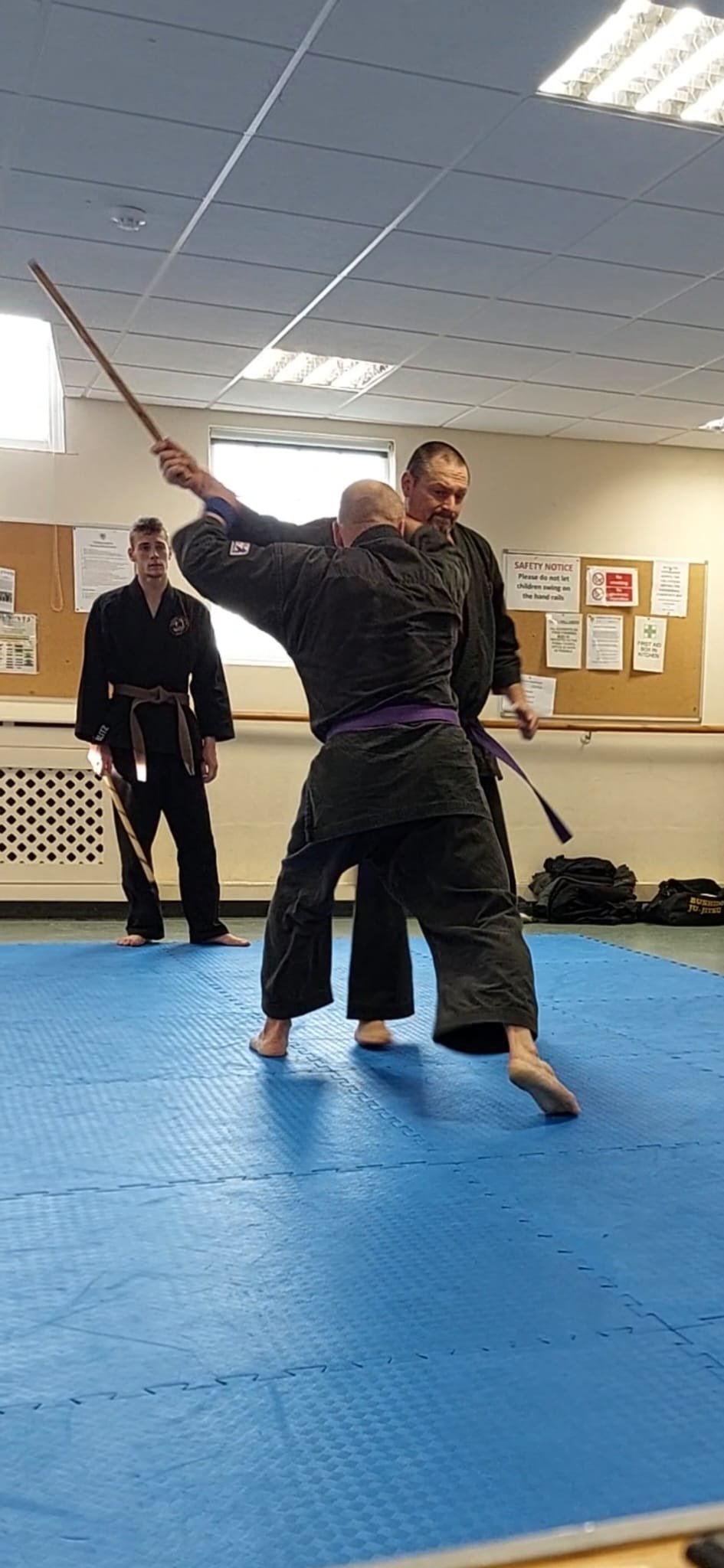
The Art of Ju-Jitsu
What is Ju-Jitsu
Ju-Jitsu is a traditional Japanese martial art centred around using technique, movement, leverage and timing to control an opponent, rather than relying purely on strength.
Training incorporates a wide range of techniques, including strikes, locks, takedowns, throws, grappling, restraints and escapes.
The art teaches students to adapt to different situations, developing not only practical self-defence skills but also balance, coordination, awareness, confidence and control.
The name Ju-Jitsu is often translated as “gentle art” or “gentle technique”, reflecting the principle of using efficiency and technique rather than meeting force with force.
The History Of Ju-Jitsu
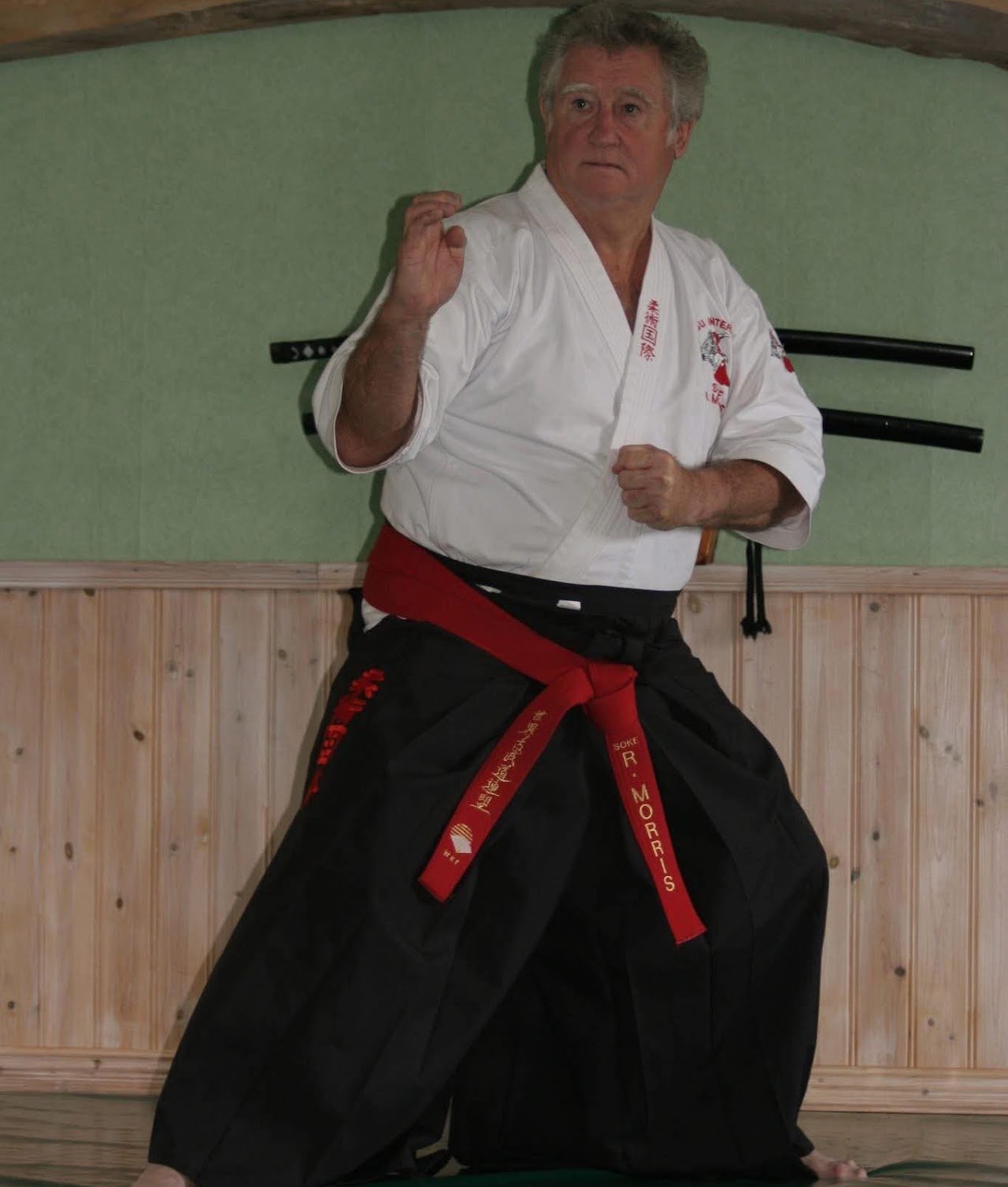
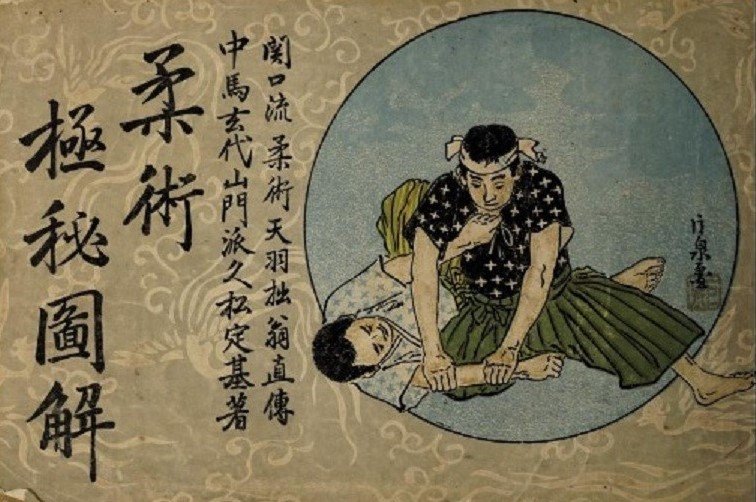
The roots of Ju-Jitsu can be traced back to traditional Japanese martial arts developed for combat, particularly techniques designed to allow a smaller or less heavily armed person to defend themselves against a stronger or more heavily armed opponent.
During Japan’s feudal period, warriors developed methods of close-quarters combat that included throws, joint locks, strikes, pins and other techniques. These methods became known collectively under various names and were taught through different schools, or ryūha, each developing its own approach and techniques.
Ju-Jitsu became particularly associated with the Samurai, who needed effective methods of combat at close range when weapons were unavailable or impractical.
Over time, Ju-Jitsu developed into numerous schools and styles. Its principles went on to influence the development of other Japanese martial arts, most notably Judo and Aikido, while elements of traditional Ju-Jitsu also influenced the development of modern Karate.
Today, Ju-Jitsu continues to evolve, with different schools and organisations preserving traditional principles while adapting their training to modern practice and self-defence.
Ju-Jitsu: The Mother Art?
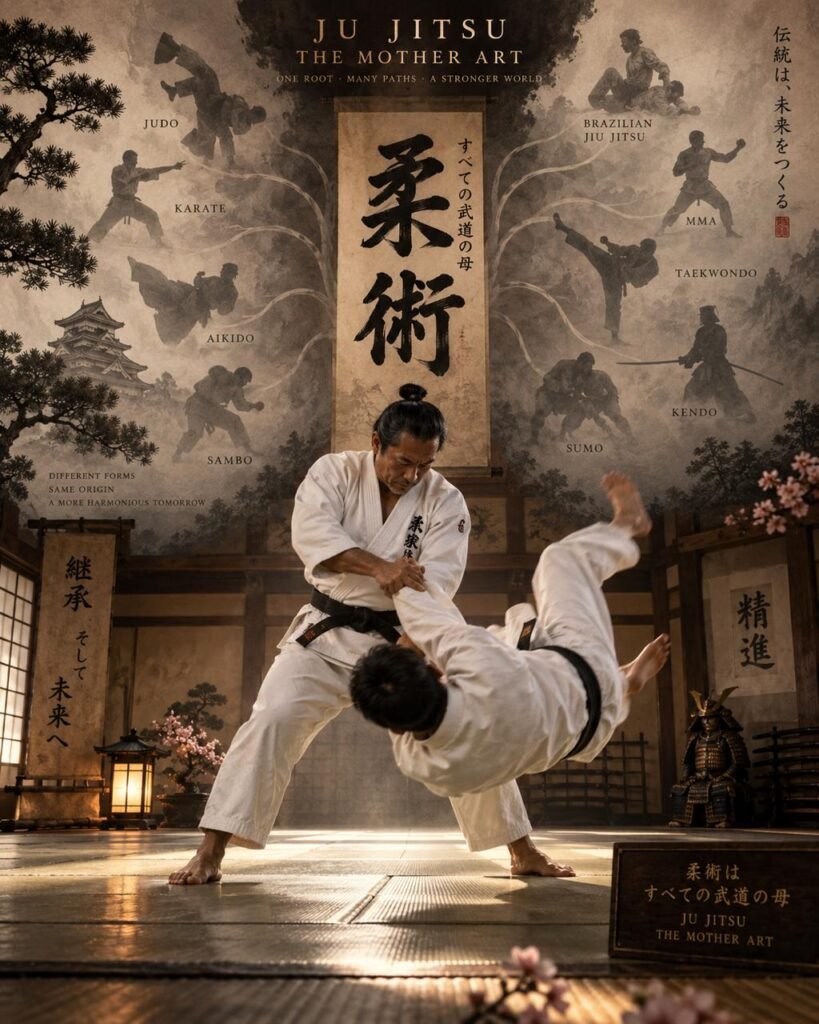
Ju-Jitsu is often described as the “mother art” because of the influence its techniques and principles have had on the development of other martial arts.As different Ju-Jitsu schools evolved in Japan, their techniques and training methods were adapted and developed into new systems. Judo was developed from traditional Ju-Jitsu by Jigoro Kano, while Aikido was later developed by Morihei Ueshiba from a number of martial arts, including Ju-Jitsu traditions.Ju-Jitsu has also influenced martial artists and systems around the world, with its principles of leverage, balance, movement and technique continuing to shape modern martial arts and self-defence.The many different styles of Ju-Jitsu that exist today reflect this long history of development and adaptation.
What do we train?
Ju-Jitsu has continued to evolve while retaining the principles that have made it effective for centuries.
Modern Ju-Jitsu brings together traditional techniques with practical training, allowing students to develop skills that can be applied to modern self-defence situations.
At Bushido Ju-Jitsu Ryu, our training focuses on developing technique, control, awareness and adaptability, giving students a broad foundation in martial arts that can continue to develop throughout their training.
Strikes
Punches, kicks and other striking techniques used to create distance, disrupt an attack or create an opportunity to control an opponent.
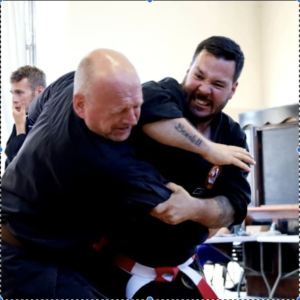
Locks & Controls
Punches, kicks and other striking techniques used to create distance, disrupt an attack or create an opportunity to control an opponent.
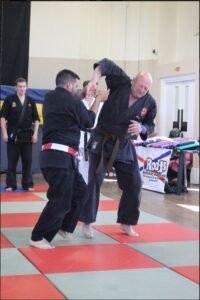
Takedowns & Throws
Techniques that use balance, timing and leverage to take an opponent to the ground.
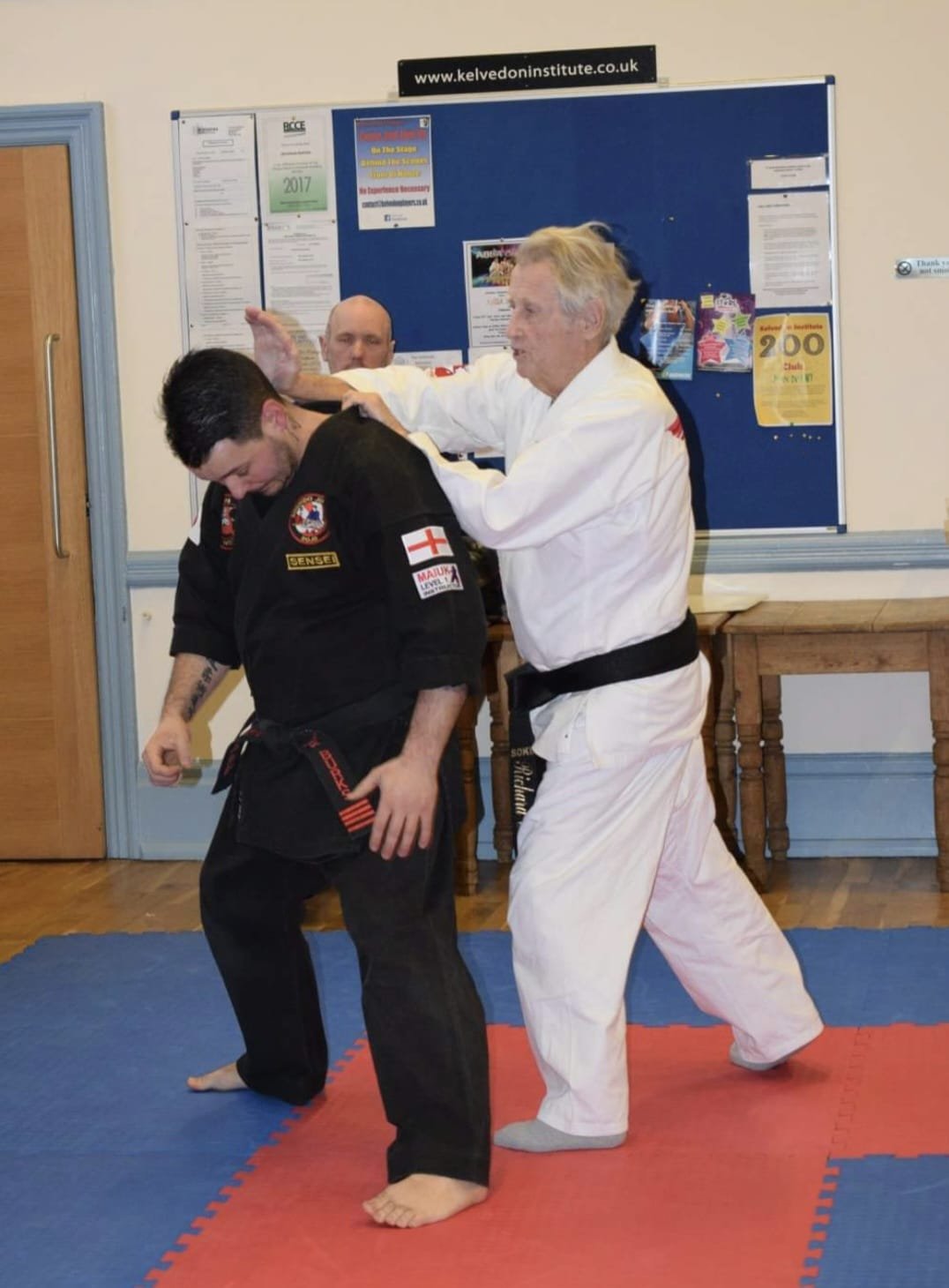
Grappling & Restraint
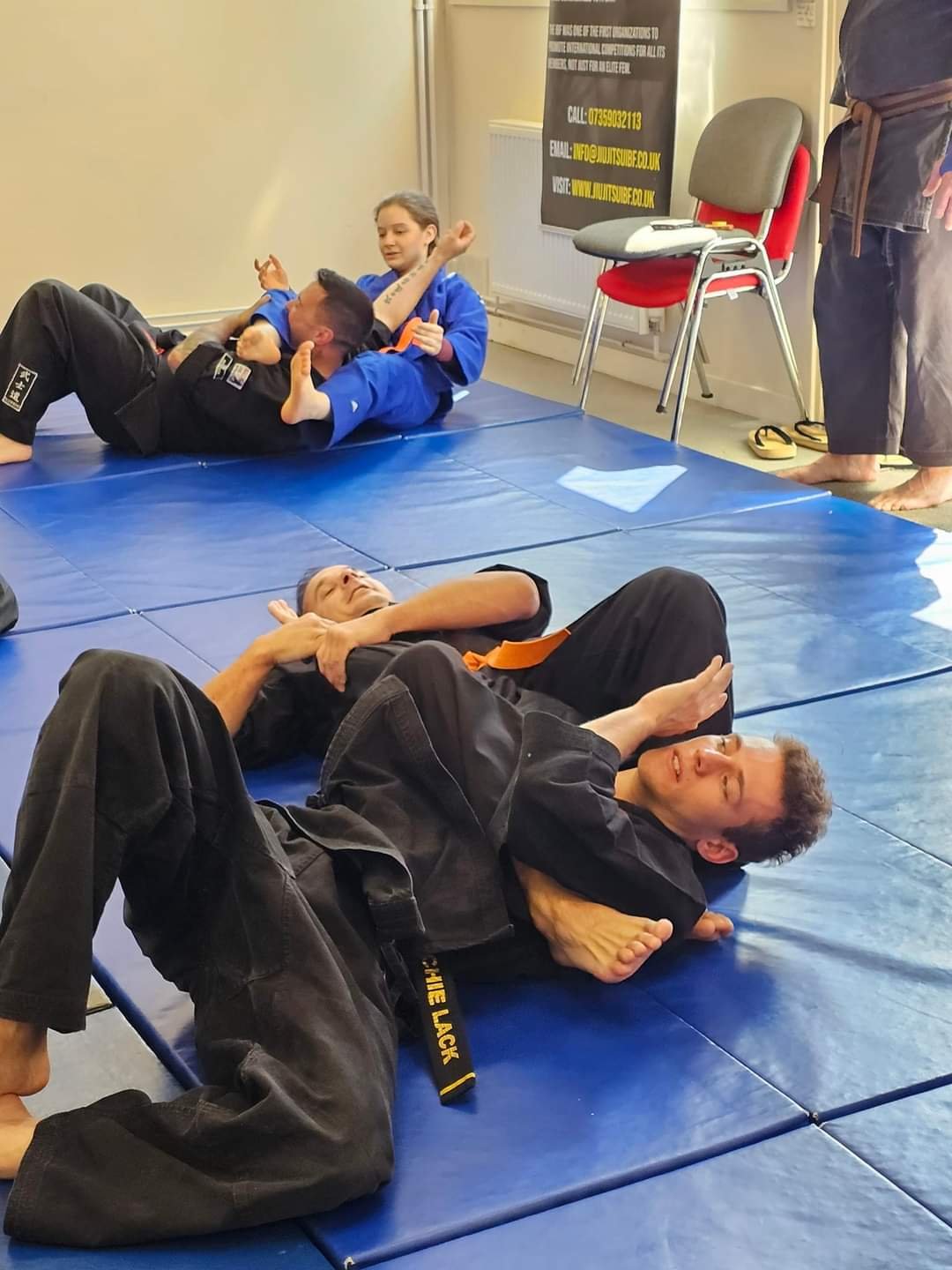
Groundwork, pins, escapes and restraint techniques for situations where an encounter continues at close range.
Defence & Evasion
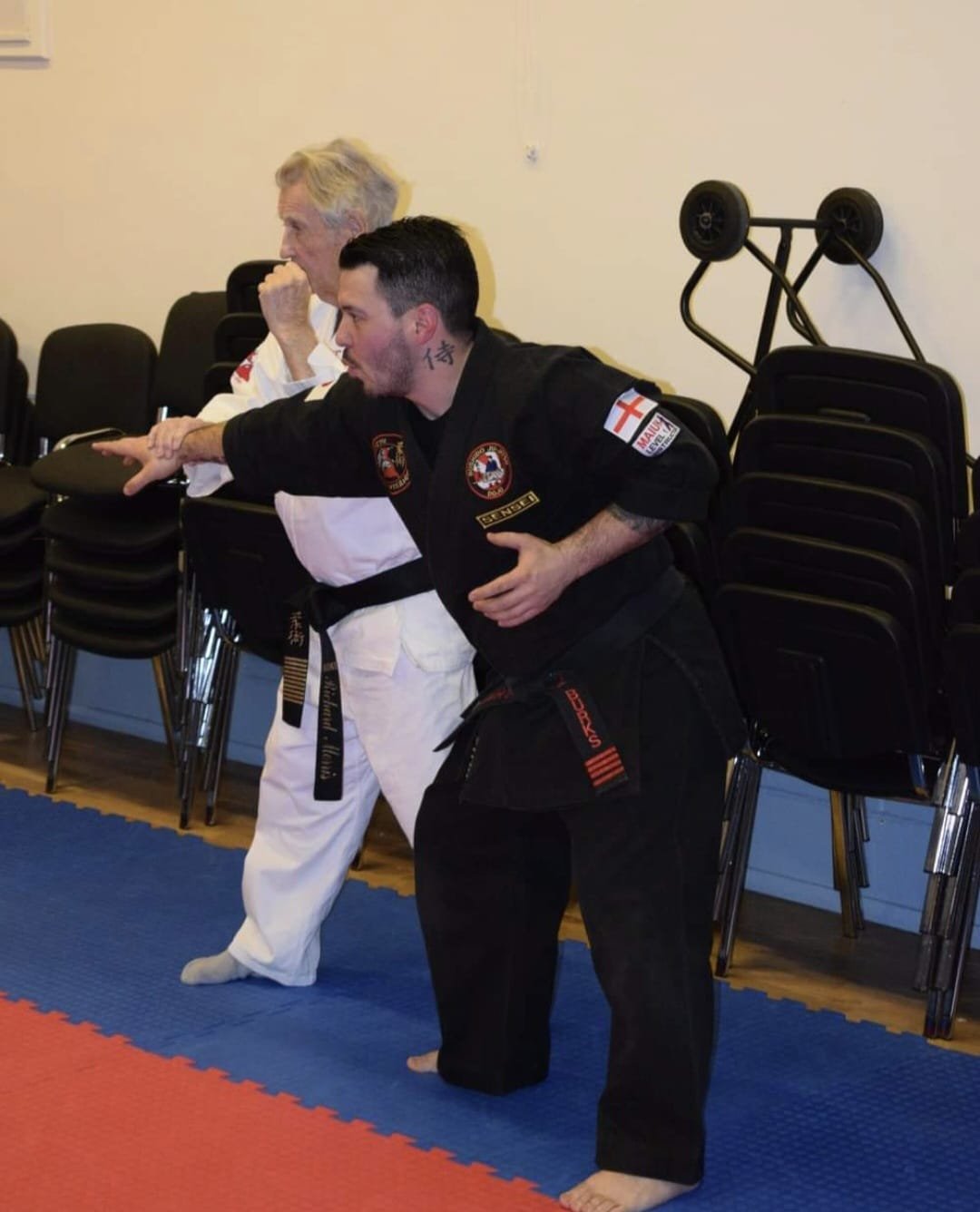
Blocking, movement, evasion, off-balancing and escape techniques designed to help students respond effectively to an attack
Weapon Defence
Training can also include defensive techniques against common weapons, developing awareness, positioning and appropriate responses.